
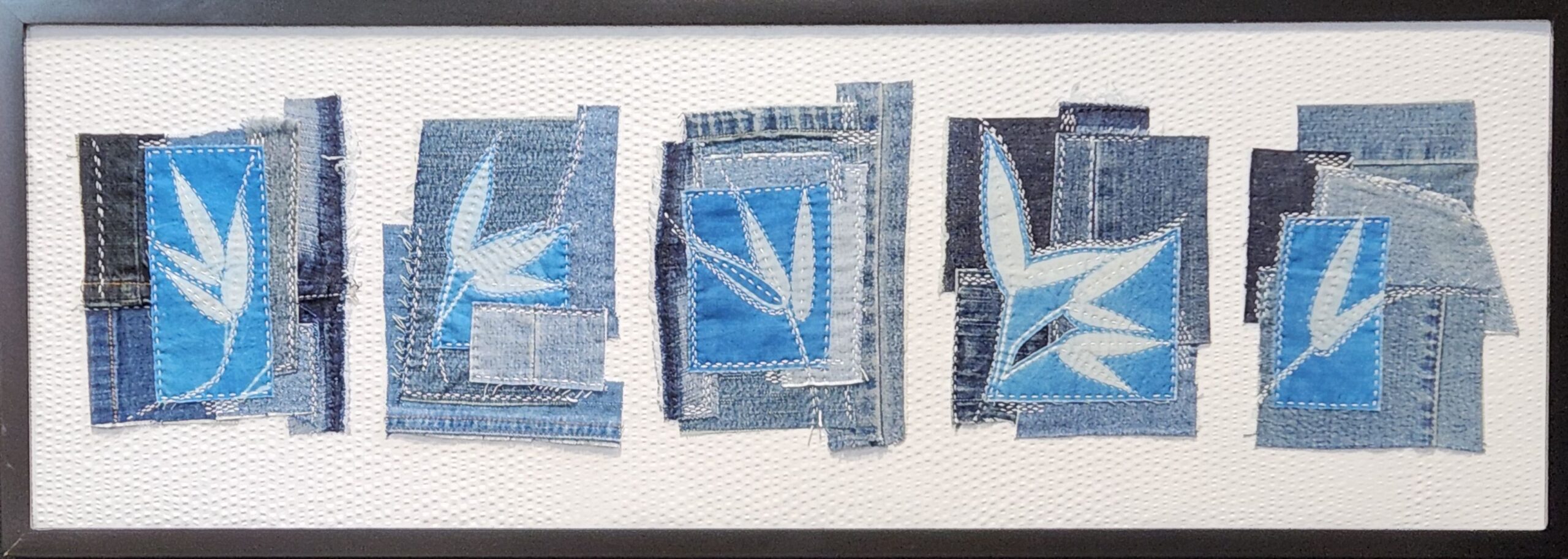
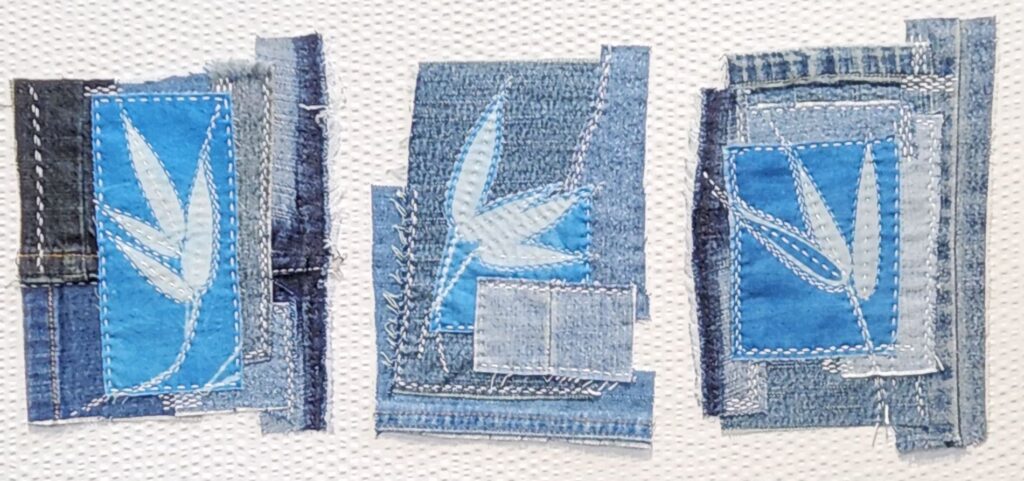
Featured image: Blue Bamboo by Karen Rowe*
Boro is a Japanese term, referring to stitched and mended textiles, and comes from the word ‘boroboro’ meaning ‘tattered’ or ‘worn-out.’ It refers to the practice of reworking and repairing clothes or bedding through piecing, patching and stitching, in order to extend their use. It is associated with the indigo-dyed hemp clothing traditional in Japan before the introduction of cotton. Worn areas of cloth are patched over or older garments cut up and joined, with running stitches or areas of sashiko (running stitches sewn through layers of fabric), used for reinforcement and to quilt layers of cloth together. Modern Boro work reflects this tradition by using simple stitches to apply and combine scrap and recycled fabrics, creating new textiles from the old.
Historically, it was more economical to grow, spin, dye, weave and make one’s own clothing over buying new garments, and equally as economical to re-use old, worn-out clothing as fabric for new garments.
Traditional Boro generally uses indigo dyed fabrics: indigo dyes often being the only dyestuff available to use by the peasant classes. Contemporary work may incorporate other materials, but blues and grey shades still predominate, and are a key feature of the technique.
The use (and re-use) of old fabrics helps give Boro its distinctive appearance – washing and wear adds softness and fades bright colours into mellow tones.
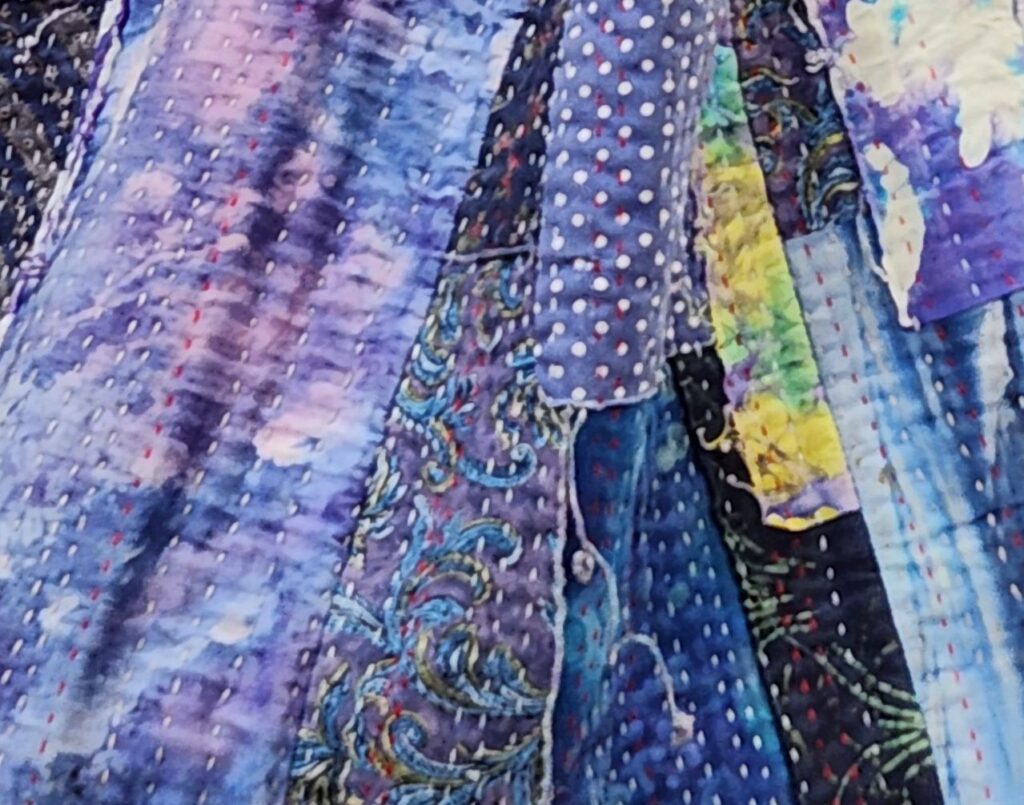
With the general increase in living standards in Japan, most boro pieces were discarded and replaced by newer clothing. To many working class Japanese people, these garments were an embarrassing reminder of their former poverty, and little effort was spent by government or cultural institutions at the time to preserve them. However, over time, boro textiles came to exemplify the Japanese aesthetic of wabi-sabi, with the fabric’s reflection of natural wear and use considered beautiful.
More recently, there has been a renewed interest in these textiles. Contemporary artists have incorporated its techniques into their work, reflecting a growing appreciation for handmade, sustainable, and culturally rich textiles. Boro also serves as a reminder of the value of craftsmanship, promoting the idea of reuse, repair, and repurposing and helping to reduce waste and minimize environmental impact.
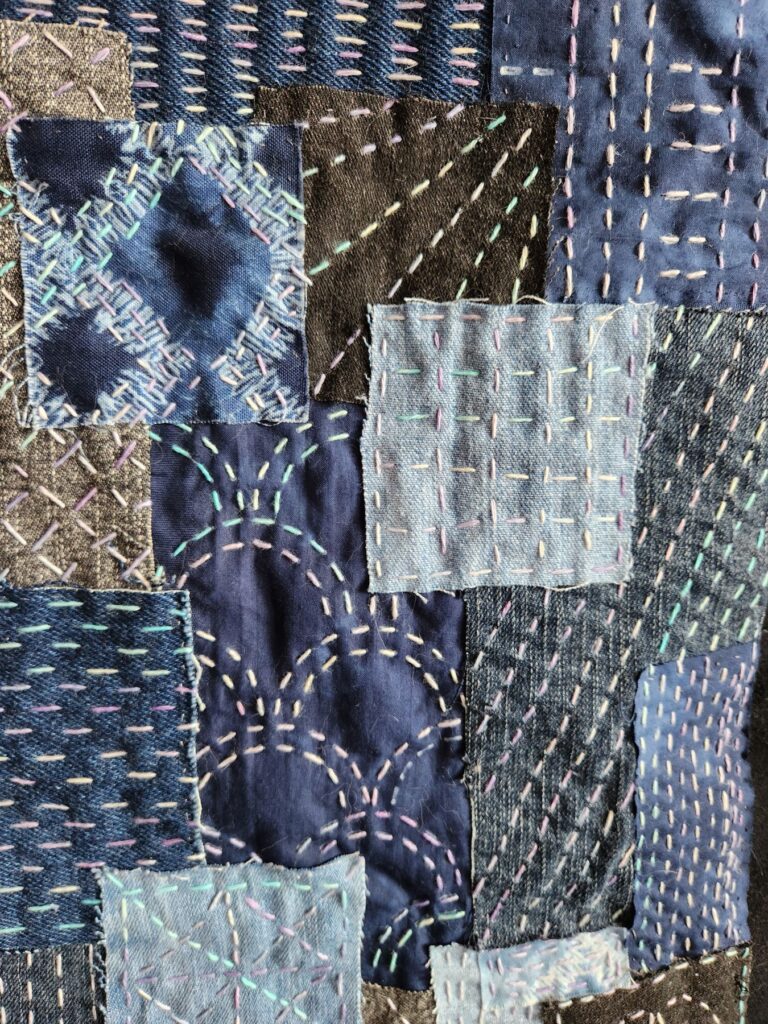
Most of the surviving antique pieces are garments, but boro techniques can be applied to a wide variety of items, both useful and decorative. It makes new cloth out of old, and encourages creativity, re-using scraps to produce something unique to each creator. The simple aesthetics of blue and white remain an attraction, although modern artists often incorporate more colourful fabrics and thread alongside the more traditional pieces of well-worn denim!
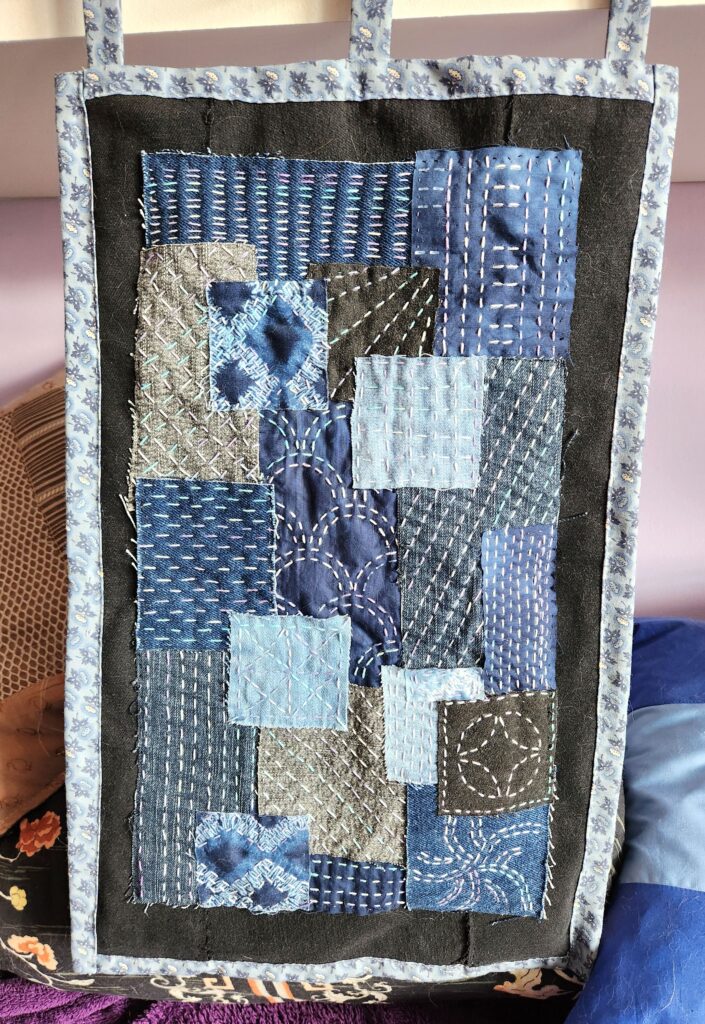
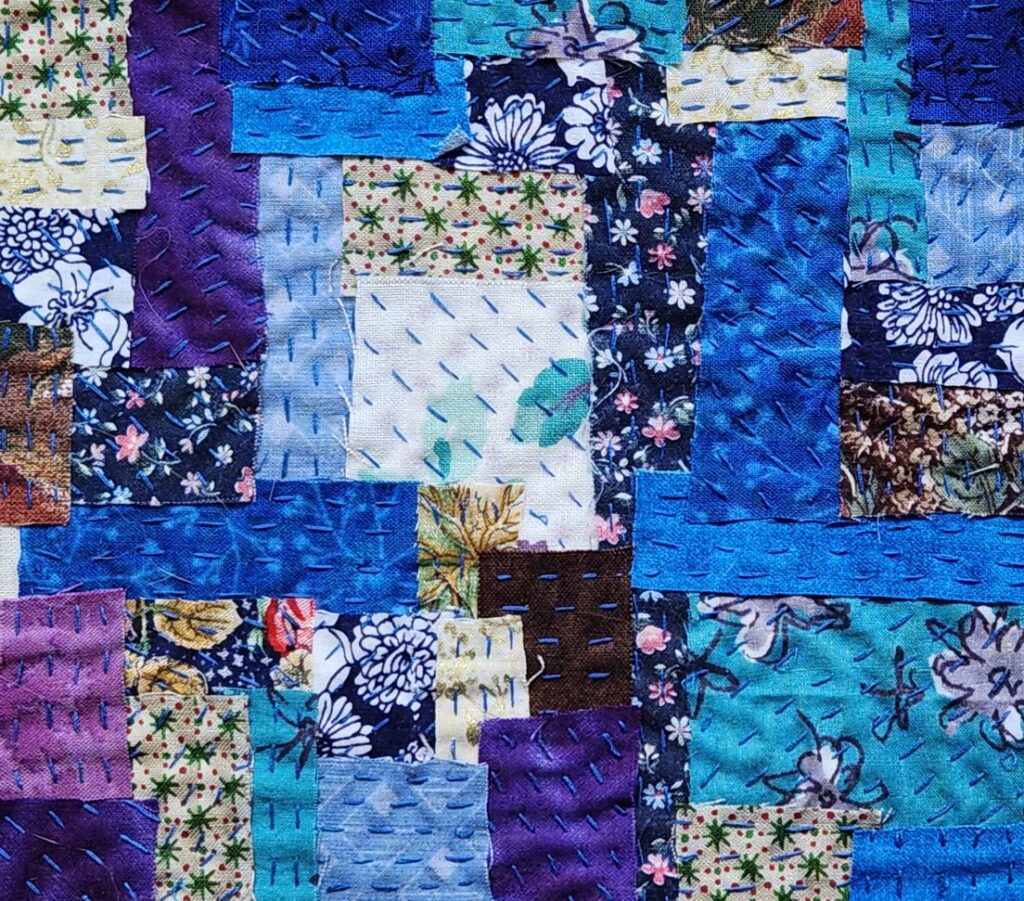
The work is simple: pieces are laid in overlapping patterns and then fastened down (and decorated) with a basic running stitch. Threads can either integrate the patch into the piece, or help it become distinct, the effect dependent on the colours used and density and direction of the stitches. Some patches can be additionally highlighted through the use of sashiko patterns.
Boro and Sashiko are closely related – the need to patch and repair encouraged the decorative styles of stitching used in Sashiko, and the two developed alongside each other. They are not synonymous, however. Boro is primarily about reusing old fabrics, and can be produced with simple running stitches, while Sashiko can be used on whole cloth new materials as well as on Boro pieces. Contemporary Boro sometimes incorporates other stitches as well.
The V&A offer a free pattern for a Boro bag, which can be downloaded from: V&A · Make Your Own: Japanese ‘Boro’ Bag (vam.ac.uk)
*Blue Bamboo, (above) stitched by Karen Rowe.
Karen is a member of Meniscus Textile Artists group, and this piece was exhibited on their stand at the NEC Show – we loved it. Karen said ‘It’s Cyanotype prints onto old tablecloths and sheets. The bamboo grows in my garden, and I bought the cyanotype ‘ingredients’ online. I arranged some denim scraps (mostly bits of family jeans) flat on a surface, moving them about until I liked the shape they made, pinned them, added the bamboo print and stitched them together in a ‘boro’ style, with running stitch. I just stitched each piece until it looked ‘right’. Mindful stitching. All done by eye. There was no grand plan!’