
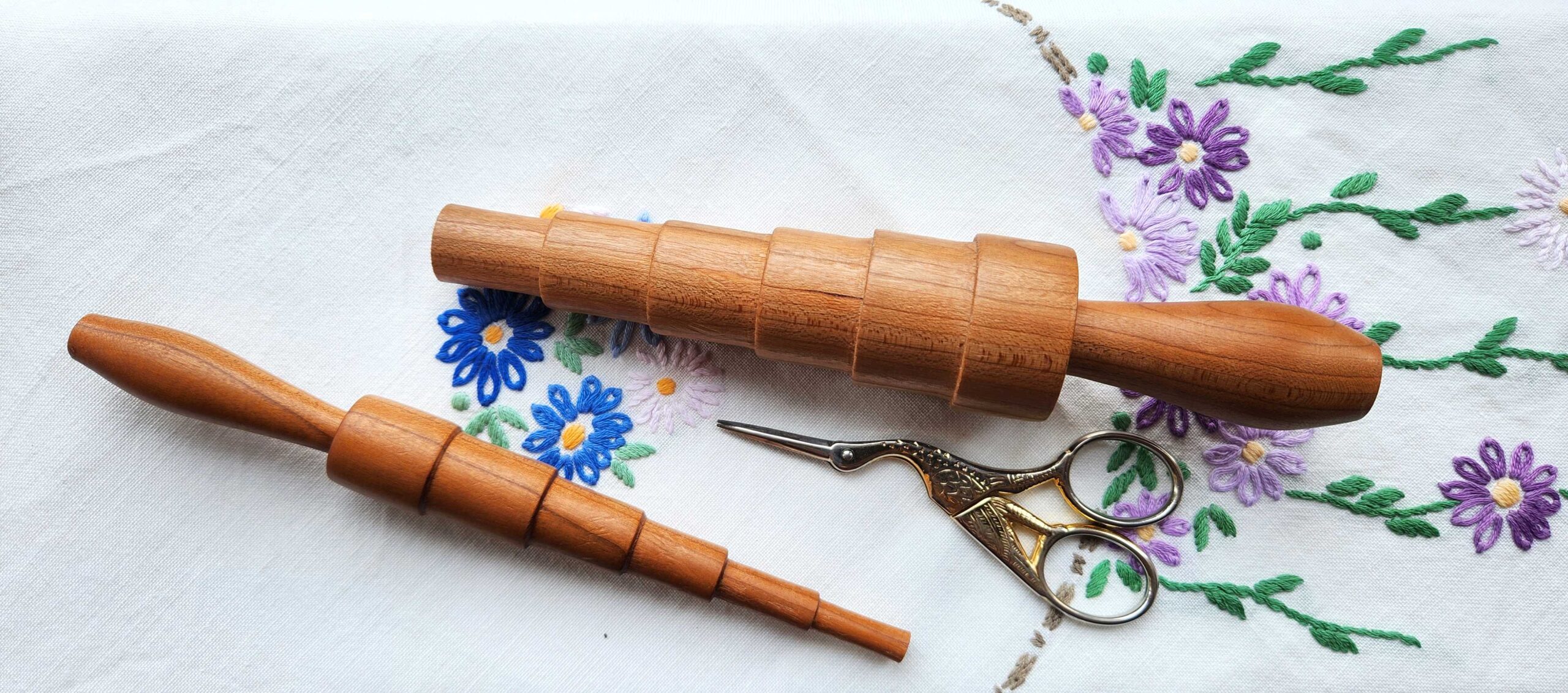
Featured: a pair of modern Couronne Sticks, with scissors (for scale)
A Couronne Stick, also known as a Hedebo Stick or Ring Stick, is a tool traditionally used in needle-lace techniques and for Hedebo embroidery. It is also useful for stumpwork, or anywhere that you might want a freestanding buttonhole ring.
They are typically made of hardwood. They can come in various sizes, have a small handle on one end, and a series of rounded sections on the other, each section stepping down in size. To produce perfectly matched circles, you create your thread rings (or Couronnes) using a selected section on the tool.
Courrone is a French word meaning crown, ring, or wreath, and you may know it as a type of pastry or bread that has been shaped into a circle. In embroidery, ring courrones are free standing circles of buttonhole stitch, made either on a special purpose courrone stick or on a pencil, a chopstick, or even, for very thin courrones, a darning needle.
Once made, they can be incorporated into pieces of needle-lace, used as the base for stumpwork flowers, or applied to surface embroidery to add interest or texture.
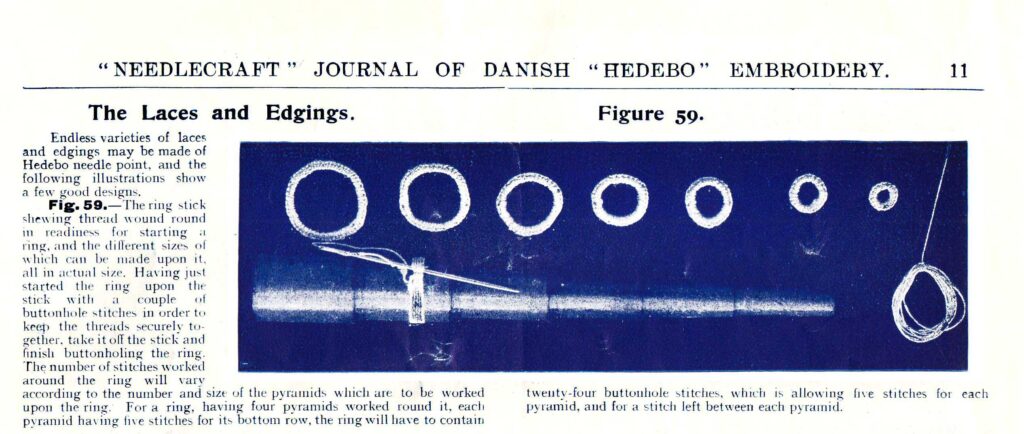
Endless varieties of lace and edgings may be made of Hedebo needle point …. Fig. 59 – The ring stick showing thread wound round in readiness for starting a ring, and the different sizes of which can be made upon it. Having just started the ring upon the stick with a couple of buttonhole stitches in order to keep the threads securely together, take it off the stick and finish buttonholing the ring. The number of stitches worked around the ring will vary according to the number and size of the pyramids which are to be worked upon the ring. For a ring, having four pyramids worked round it, each pyramid having five stitches for its bottom row, the ring will have to contain twenty four buttonhole stitches, which is allowing five stitches for each pyramid, and a stitch left between each pyramid.
‘Needlecraft Practical Journal: Issue 52 Danish ‘Hedebo’ Embroidery (Published between 1900 and 1922)
It is interesting to read that – in the early 1900’s – the practice was to start the rings on the stick, but then remove the ring and finish it freehand. Current advice varies – either to remove the partially stitched work, or to retain the ring on the stick until all the buttonhole work is done.
In practice, the two methods produce a slightly different result. Completing the ring while still on the stick tends to provide a more upright ring that needs ‘flattening out’. Removing the partially stitched rind allows the buttonhole stitches to relax and to work a flatter ring. This is the better method if the intention is to work picots around the ring, as it gives better access to wrap the needle and complete the picot knot while working the buttonhole stitches.
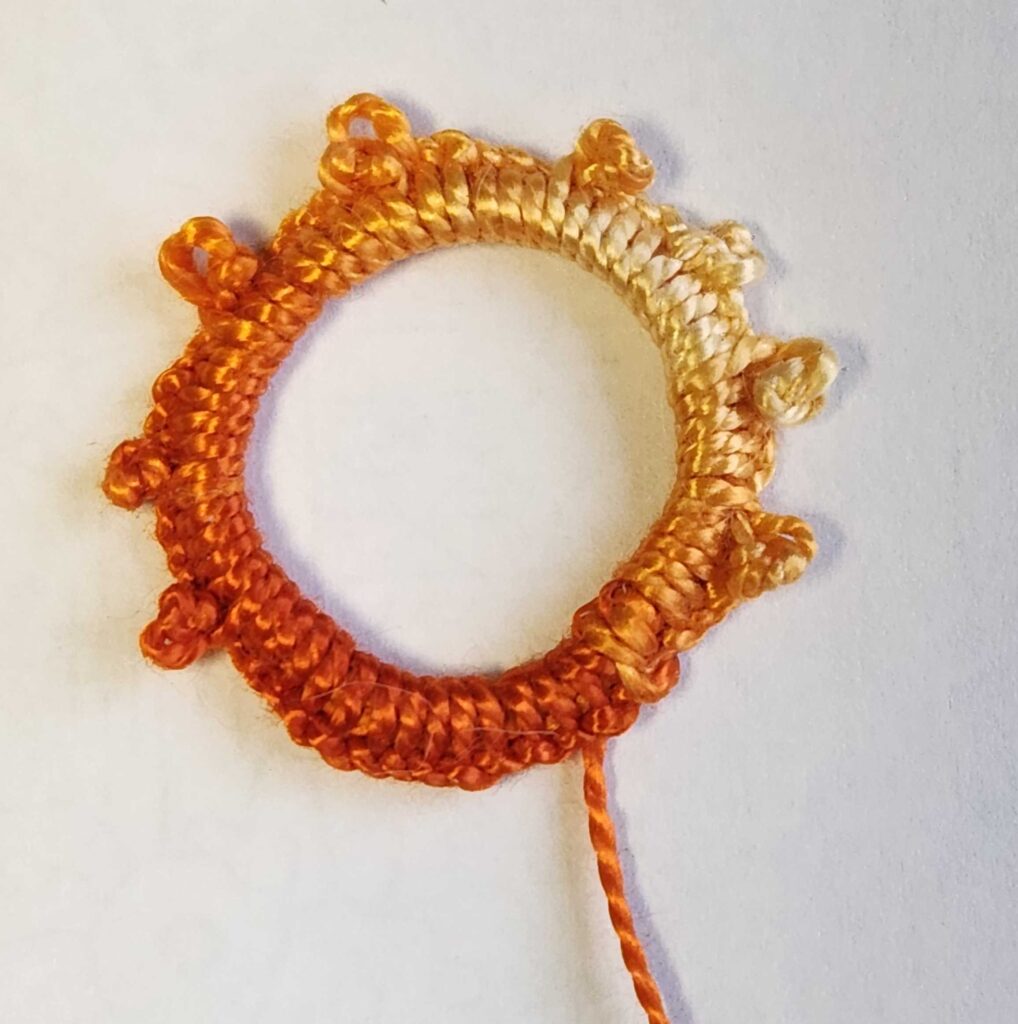
It is, of course, perfect possible to the work a second round of buttonhole stitches to add picots after removing the ring from the stick, but – again – the end result will be slightly different. Working off ring can also support the addition of beads.
The examples given in Issue 52 of the Journal clearly show that – for Hebedo work – a single line of buttonhole was used.
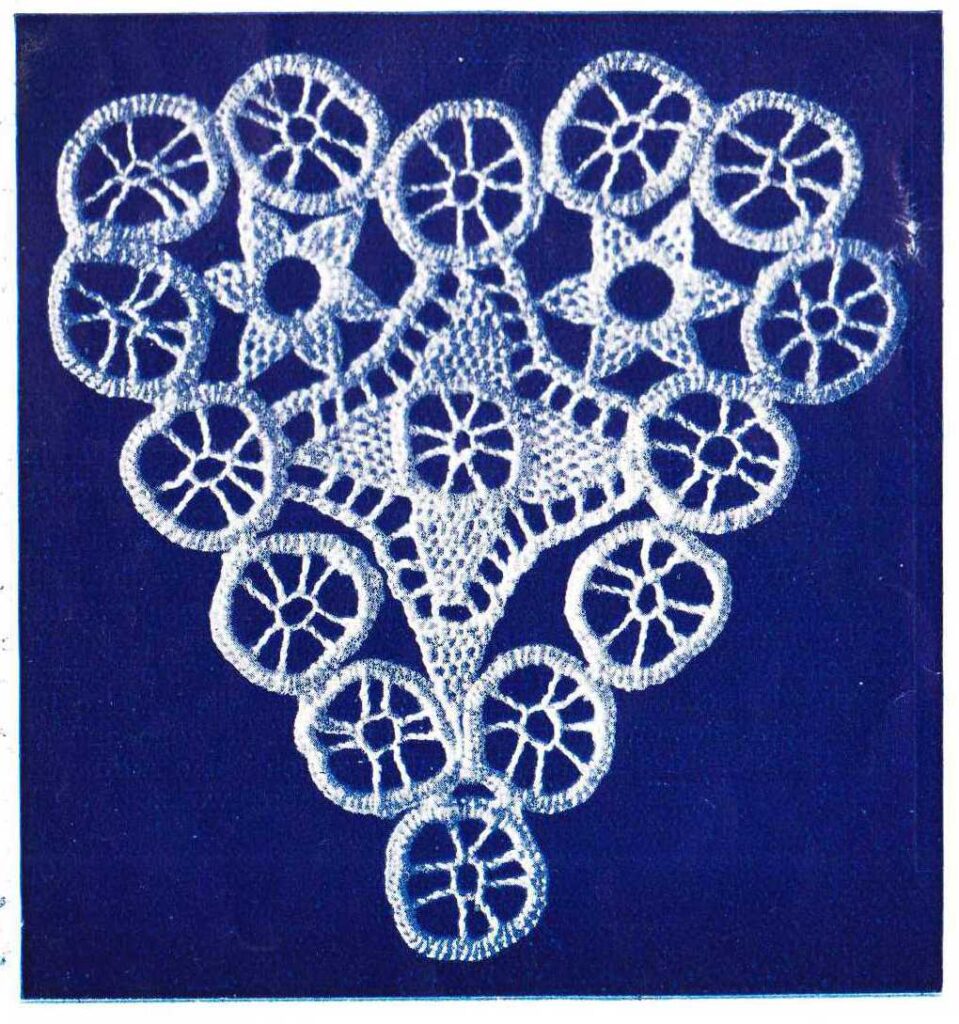
The Needlecraft Journal’s photograph (above) shows the range of ring sizes that could be made on their depicted Couronne stick. The modern sticks (featured at the top of this page) have a similar range – the sizes of the rings are determined by the section of the tool that is used, and the number of threads helps determine the flexibility of the completed ring. (The more threads used in the foundation, the sturdier the finished ring will be. Fine threads will need more foundation wraps than thicker ones!)
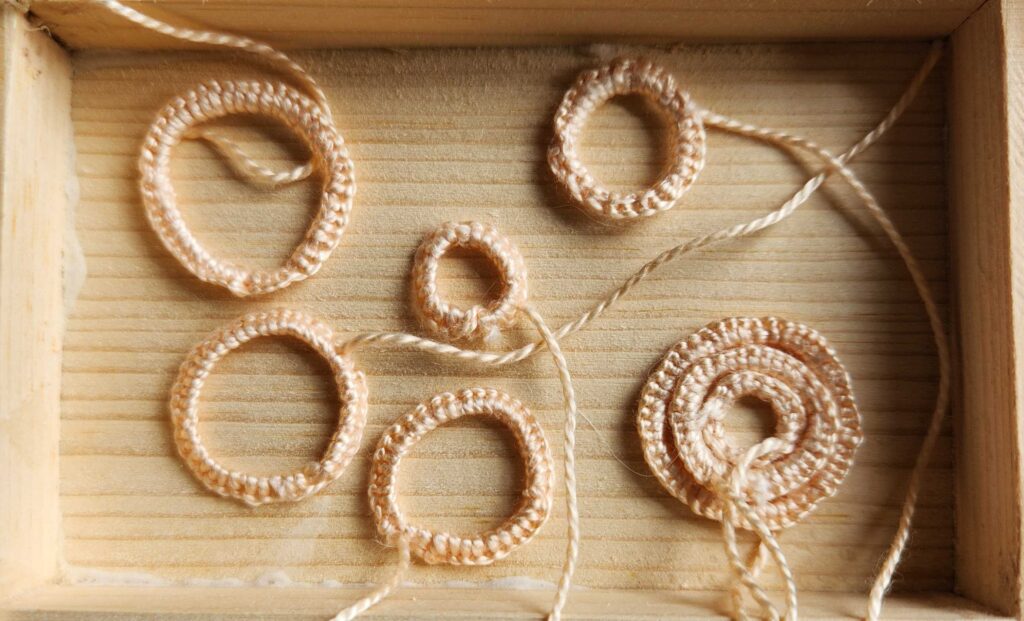
Hebedo work can be inserted as well as being used for edgings or free-standing pieces. The Guild collection has several examples.
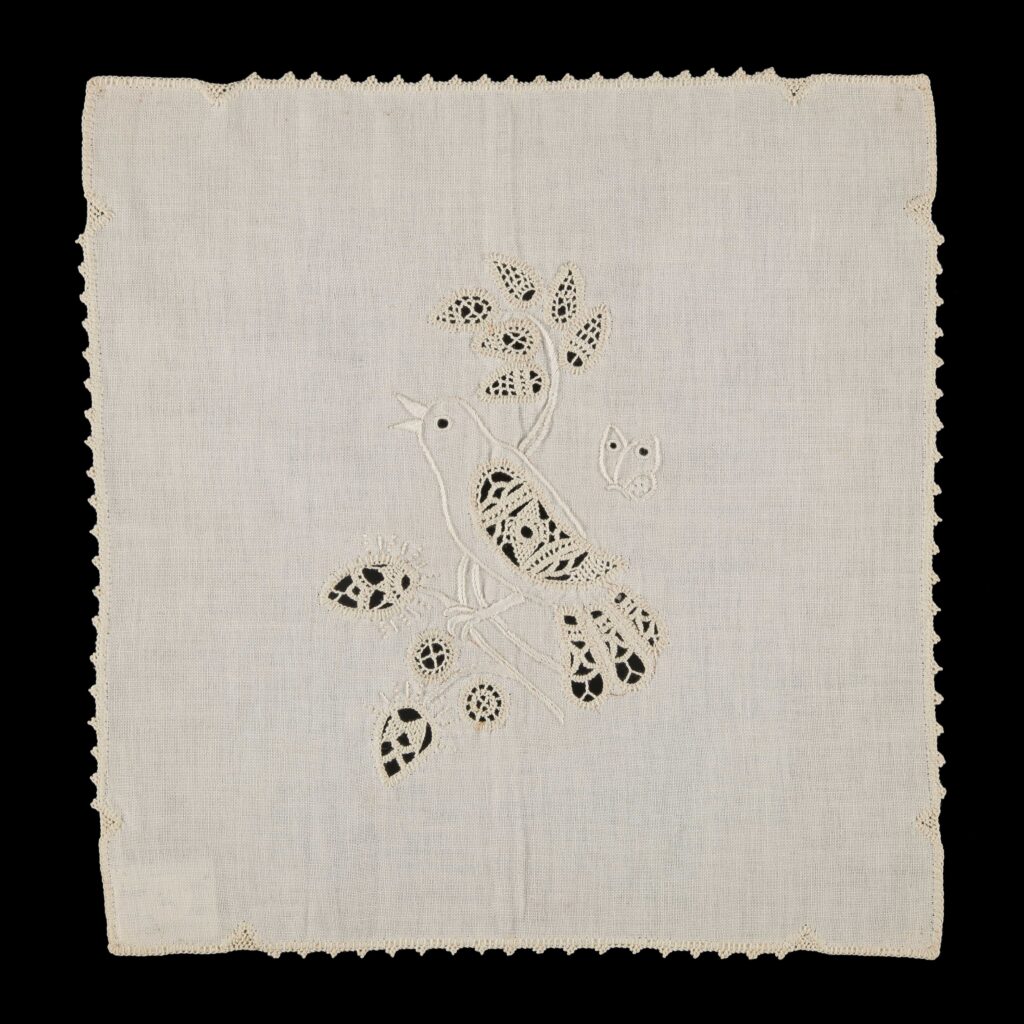
Small linen mat with bird design in the centre – needlepoint fillings & decorative needlepoint edging
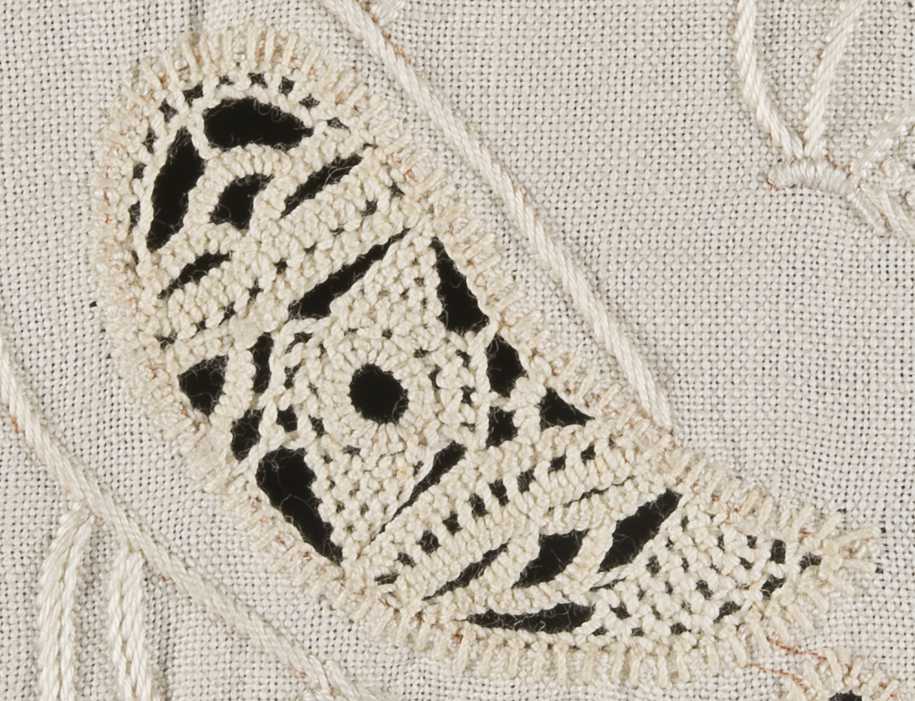
This lovely item was made in the mid 20th C and came from Barbara Snook’s studio. It’s a good example of this type of work, and, there – in the very centre of the bird – you will find a couronne, supporting the design!
The rings made on a Couronne stick can be used in other types of work. Additional rings of free standing buttonhole worked around a couronne centre can be shaped to make a stumpwork base for small flowers or a centre for larger ones. And they can be found in contemporary work, creating surface texture or framing other stitches.
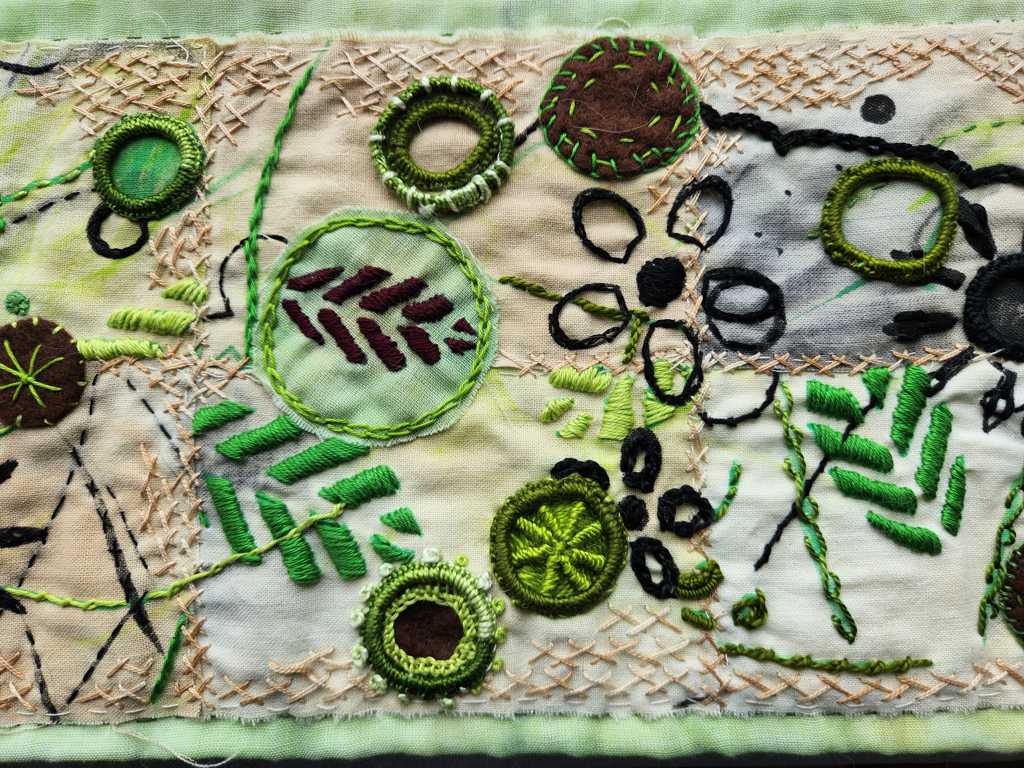
Couronne rings applied over stamped circles
New Couronne sticks – usually hand turned in hardwood – can be purchased from specialised suppliers. Antique ones might be found lurking in antique shops, or sold at auctions.
Photos, scans, and samples by Penny Hill.
Work from the Collection photographed as part of the Digitisation Project