
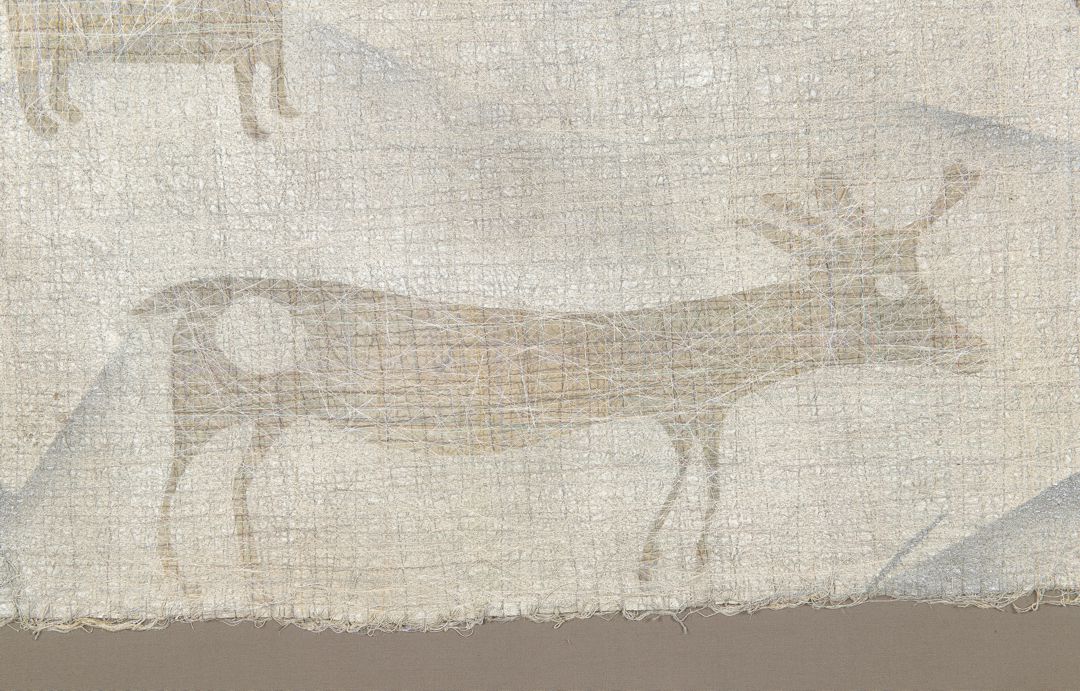
Featured image: From the Collection: close up of panel by Sarah Bungey© (Late 1980’s), with stencilled animal motifs in the style of ancient cave paintings
The theme for the 2026 Members’ Project is Footprint – Traces that remain.
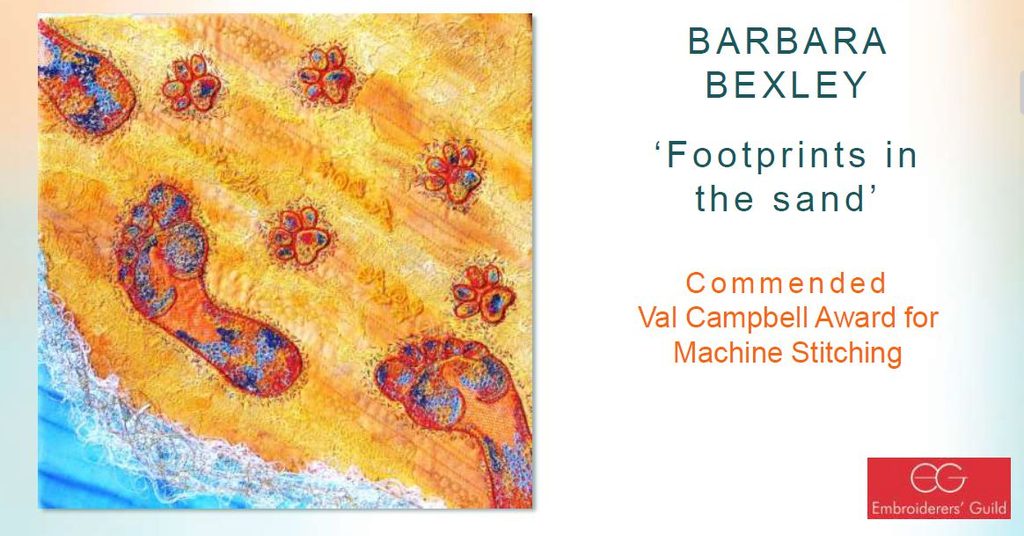
Is the first thought of trainers and the marks left by wet and muddy soles? Or wellingtons that have tramped through snow, leaving dips and tucks in intricate patterns? Or the flash of a scarlet-soled Christian Louboutin stiletto heel?
Those are the literal ways of thinking about Footprint – the visual and immediate traces left behind by the shoes we have worn. But what of the metaphorical footprint – the traces we leave behind on places, people and through time? These can indicate the paths we have walked, the heritage that is passed down through generations or left behind as different cultures fade away. These Footprints can be the legacies that we choose to leave behind.
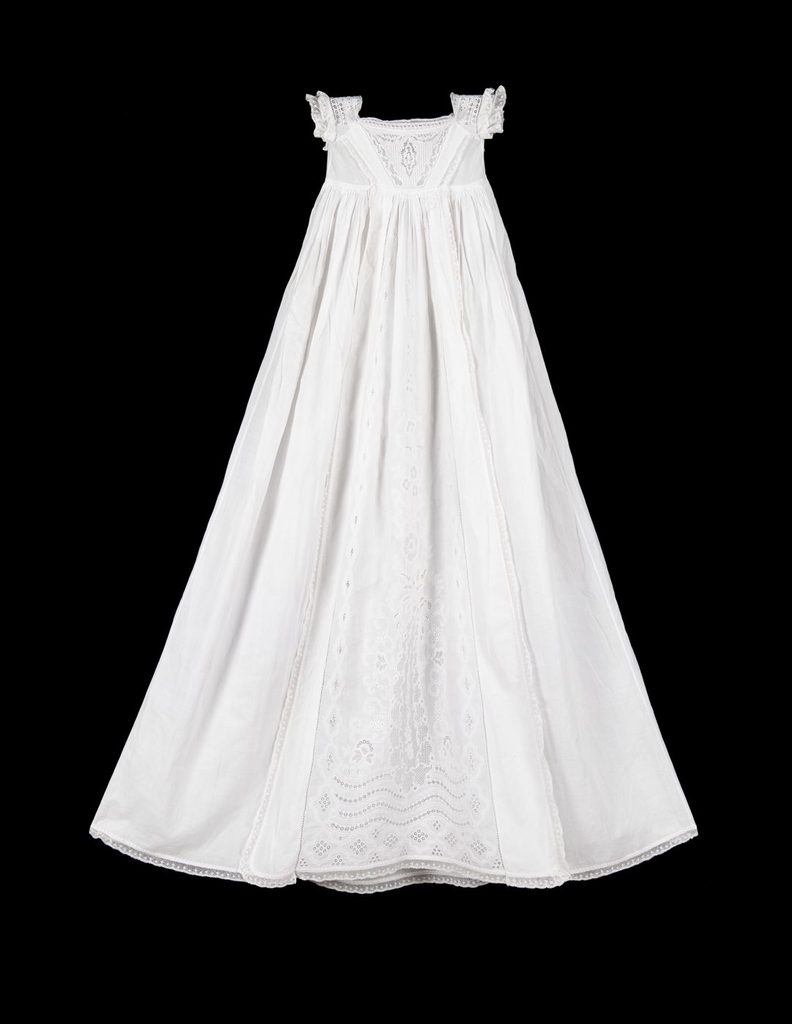
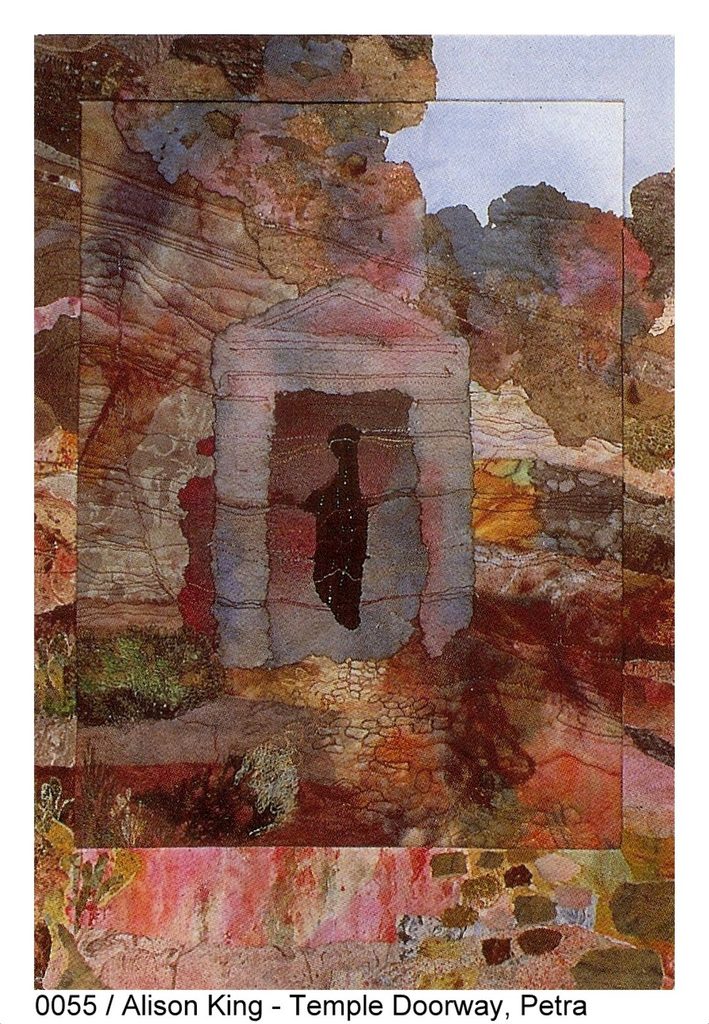
Native cave art, Greek temples and the frescoes of Pompeii have left traces of the world in a different time. The Christening gown, military uniform, and the University graduation gown are the traces of a chosen life-path. The stitched text in clothing such as Agnes Richter’s jacket, stitched whilst she was in a mental asylum, are the traces that remain of a very personal journey.
The exquisite marble inlay of the Taj Mahal stands as a testament to a love story. Suffragette banners, and Vanessa Marr’s collection of Domestic Dusters show us the traces of collective, social history. Textiles such as the Bayeux Tapestry tell the story of momentous historic times. Jordan Cunliffe has created contemporary footprints and memories by translating the data of numbers and maps into textile art.
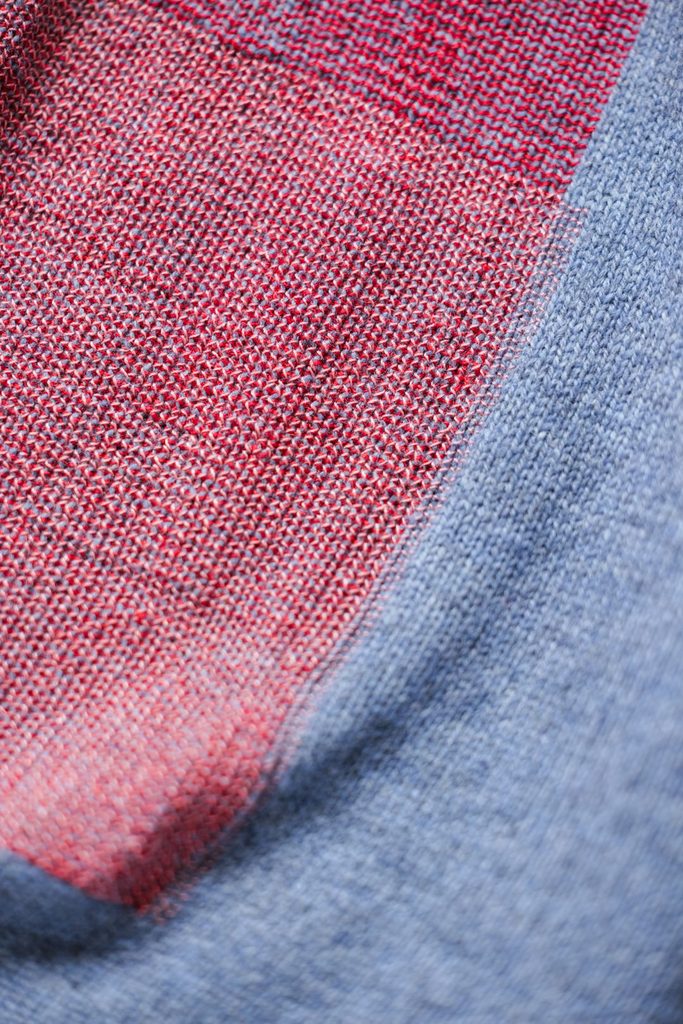
‘Grandad’s Sweater’, one diagonal red stitch for every day of my grandads life, and one opposite pink stitch for each day of my life. The red stitches on their own show his life before me, the pink stitches on their own show my life after he died, and the red and pink stitches which overlap to form cross stitches show where our lives overlapped 🙂
Embroidery Thread on Knitted Sweater, 2020.
Jordan Cunliffe©
Photo Credit; Joanne Crawford©
What of trace marks left by tools? The brush strokes of famous artists such as Monet, Van Gogh or Jackson Pollock are surely traces of their artistic talents. The finest of chisel marks can be seen in the carvings of Grinling Gibbons and in archaeology ancient fingerprints are revealing the age, sex and division of labour of historic makers.
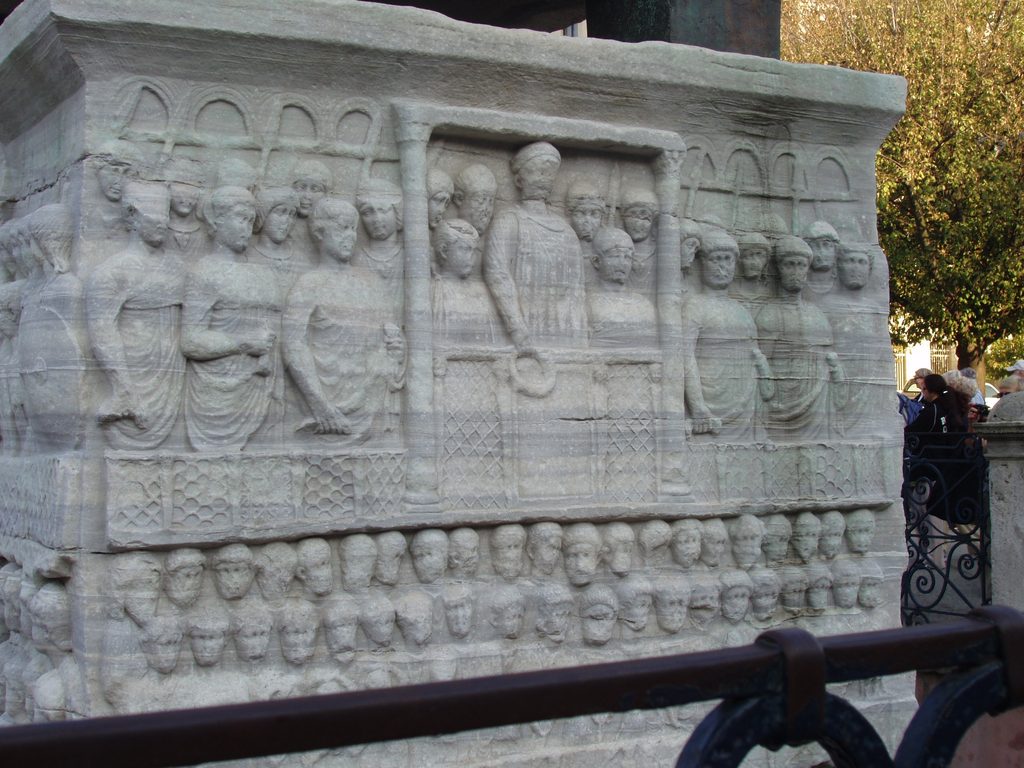
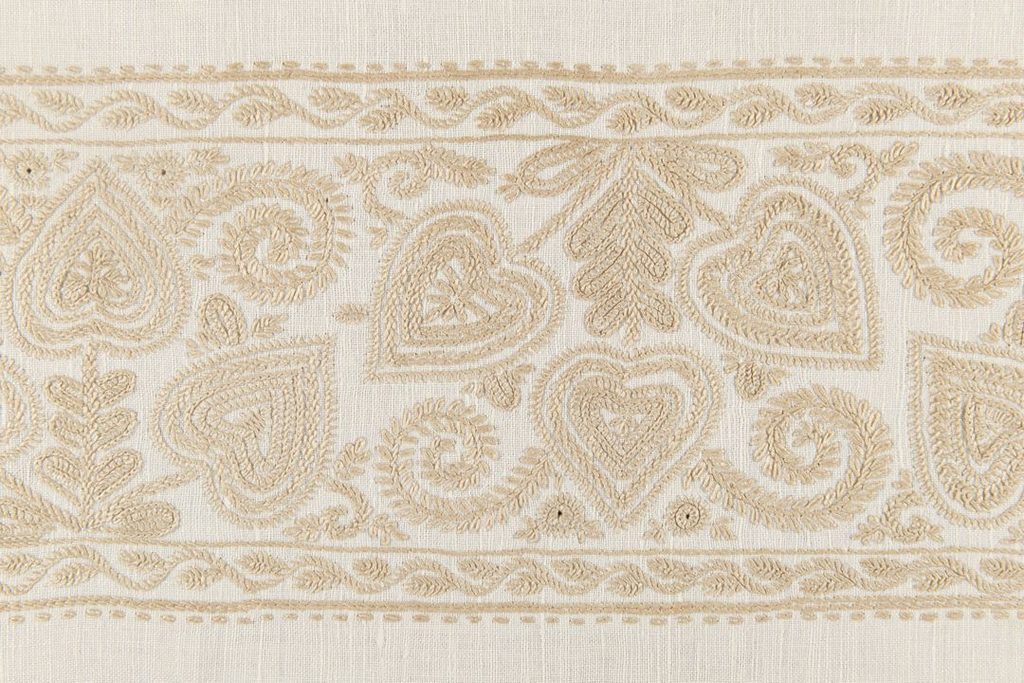
The patterns and marks of ancient metalwork belie the talent of Bronze age jewellers or the wealth and position of Roman citizens. The worn lining and silver thimble inside grandmother’s sewing basket, and the embroidered tablecloth that she stitched, are traces of a heritage craft. They are a Footprint not only of the artist, but the technique as well.
In today’s world, there is now the ‘carbon footprint’. A measurement of greenhouse gases such as carbon dioxide and methane – both produced by human activity. Their CO2 equivalent shows the impact of individuals and nations on global warming. Not so much a trace of what remains, but a hint of where we may be going.
Embroidery can transform thread into a language of memory, identity, and connection. ‘Footprint’ enables you to consider embroidery as an act of inscription, and to celebrate the quiet power of handmade marks, demonstrating how even the smallest stitch can leave a lasting impression that will continue to resonate long after the making.
Guidelines and entry forms
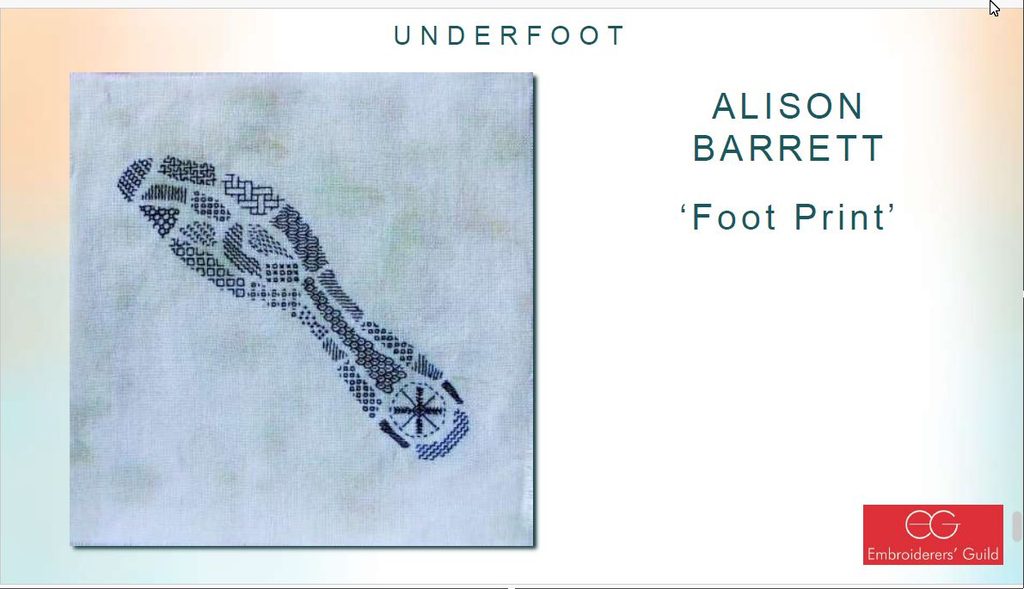
The Members’ Challenge theme for 2017/18 was ‘UNDERFOOT’
Find further inspiration in some of our ThreadIT Blog Inspiration posts: